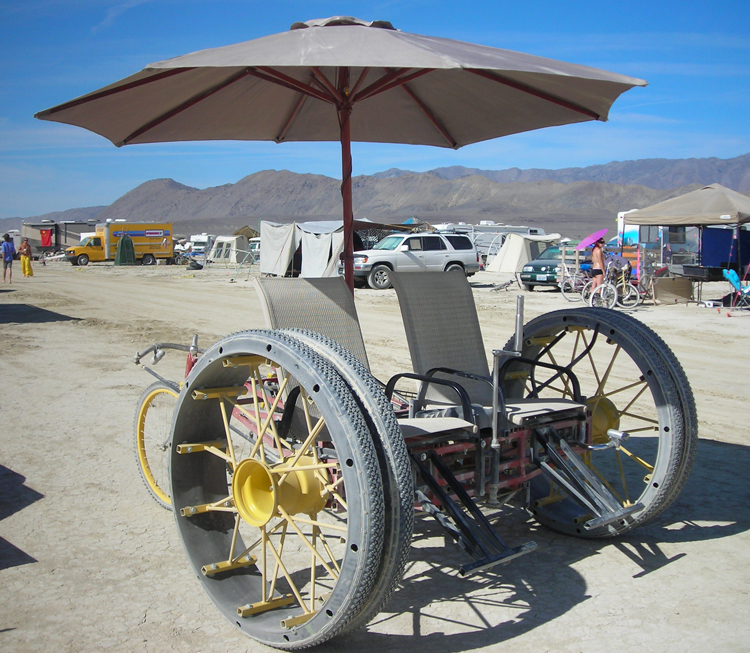
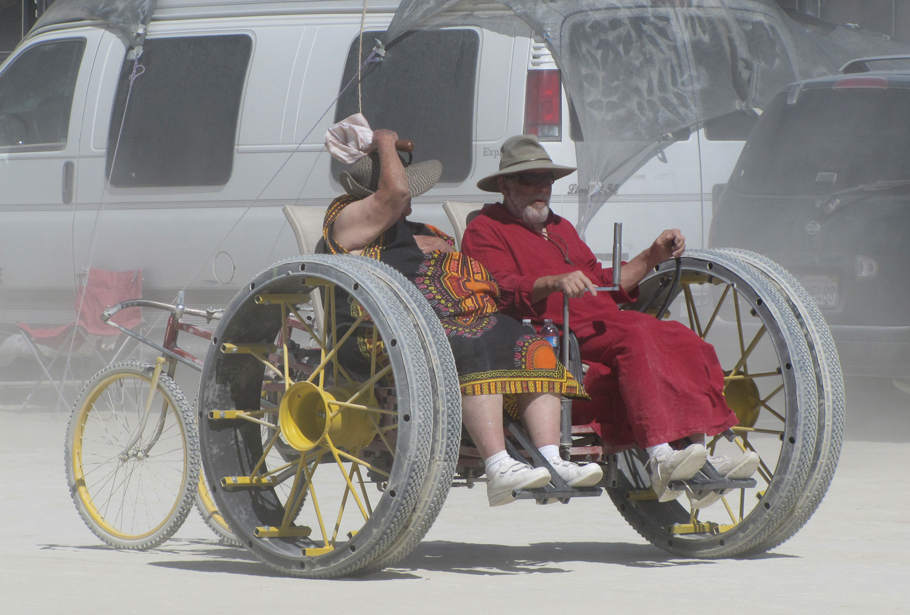
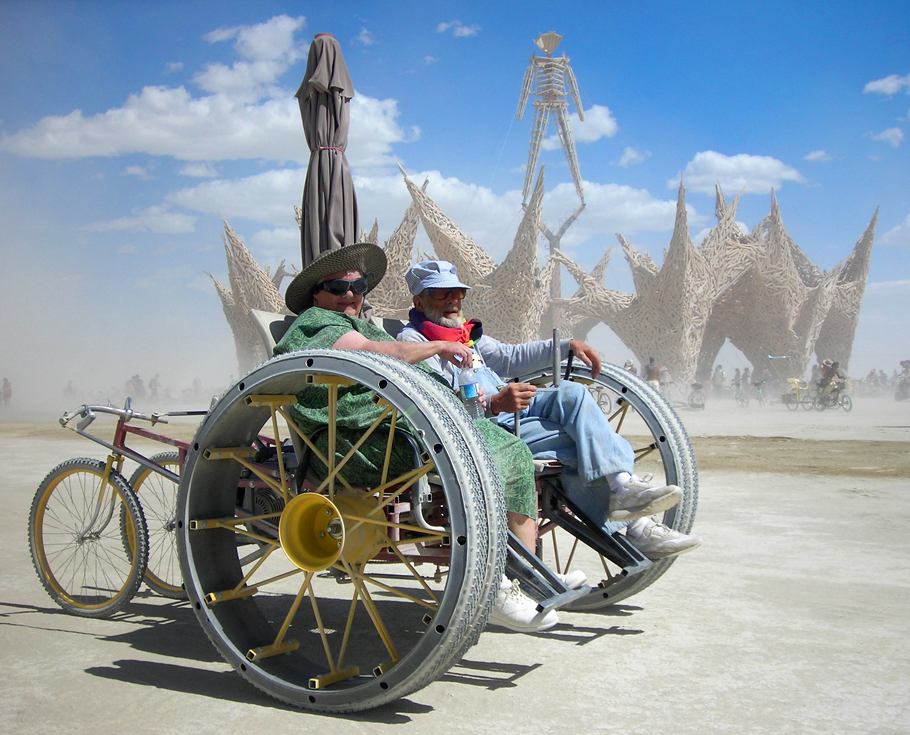
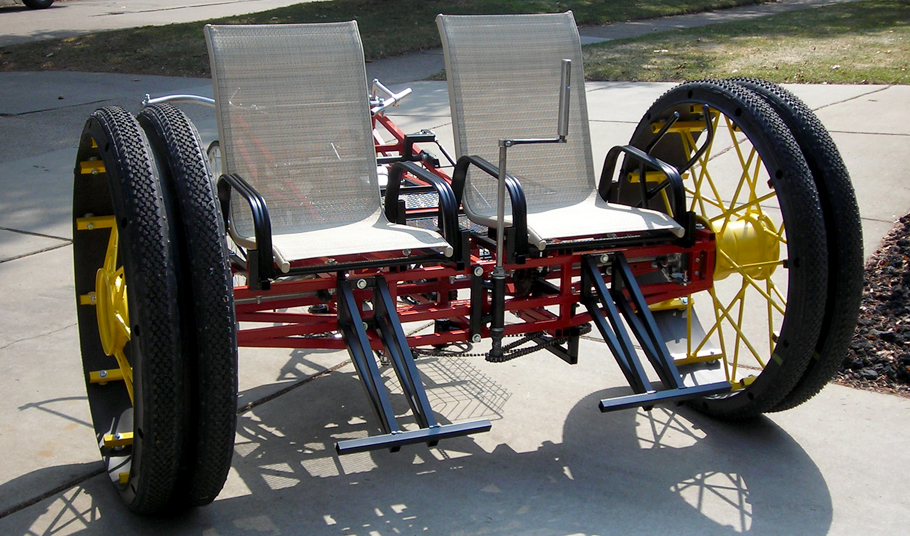
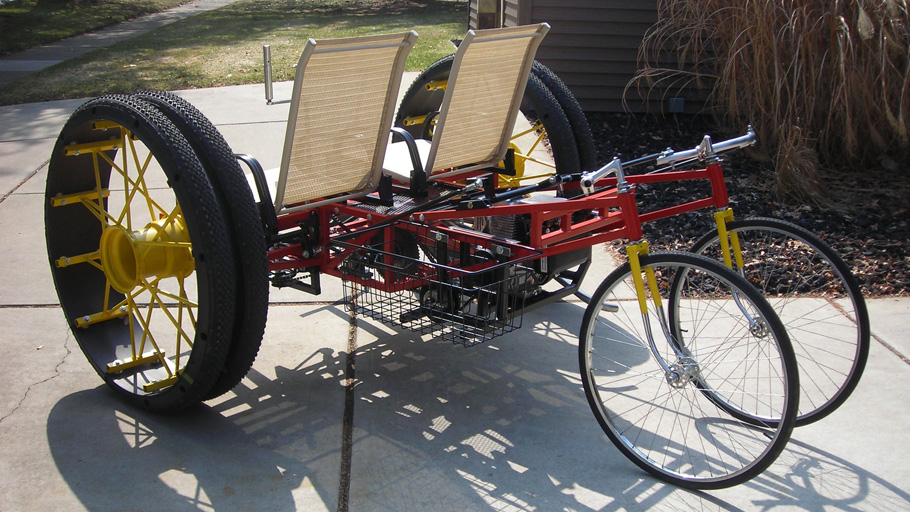
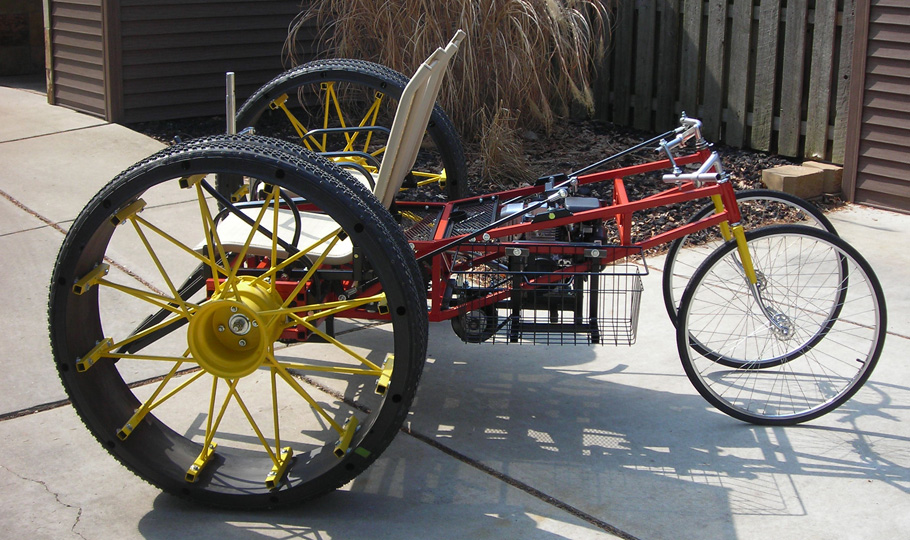
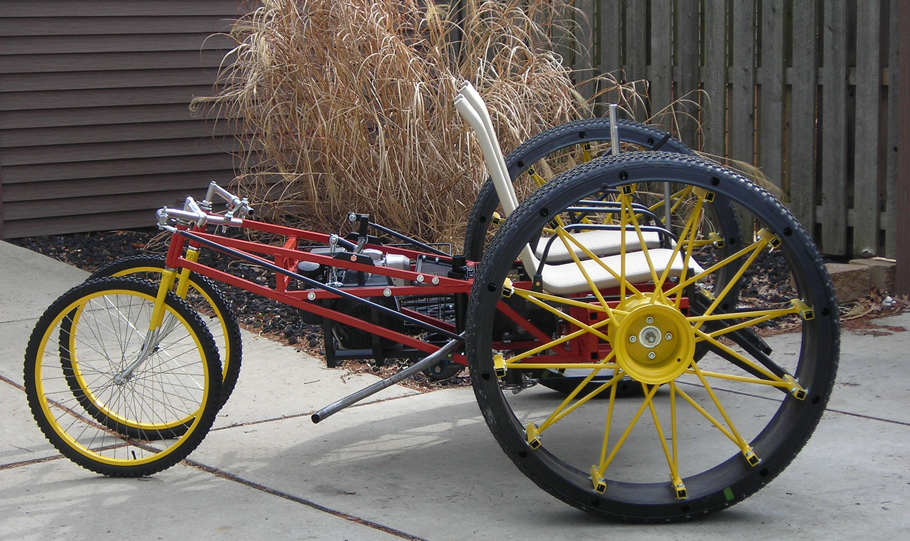
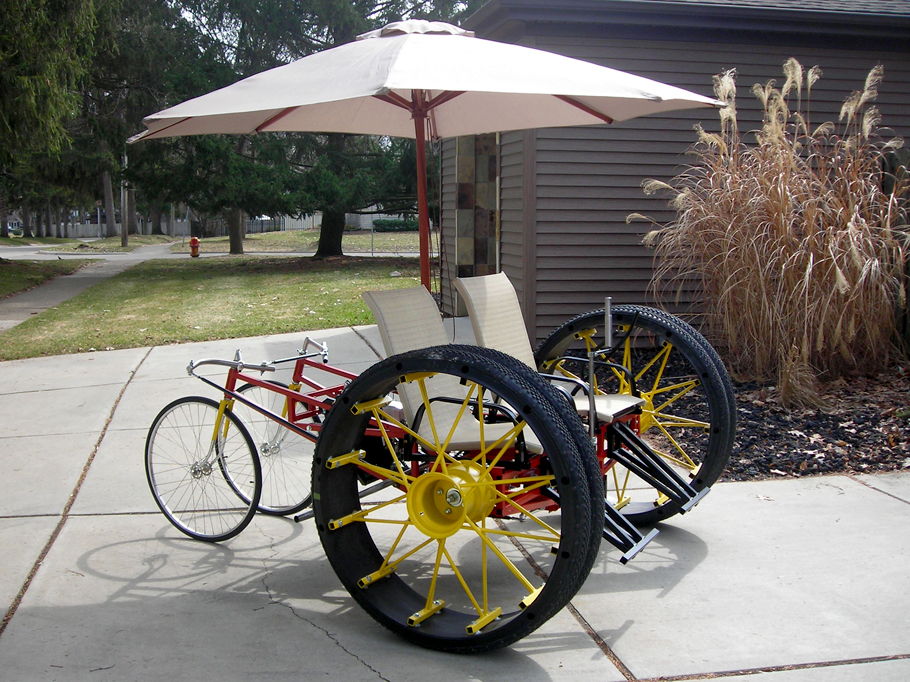
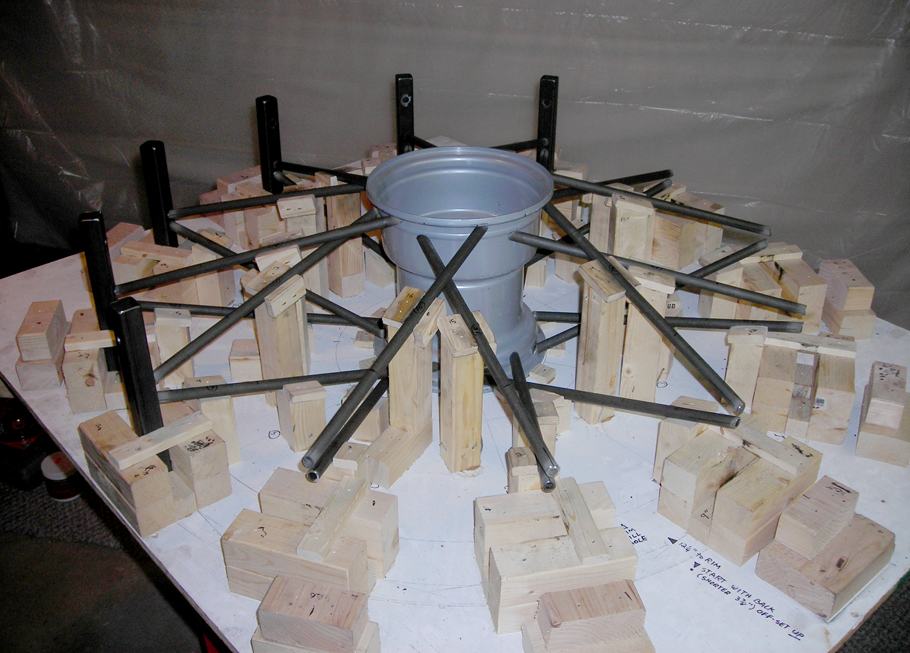
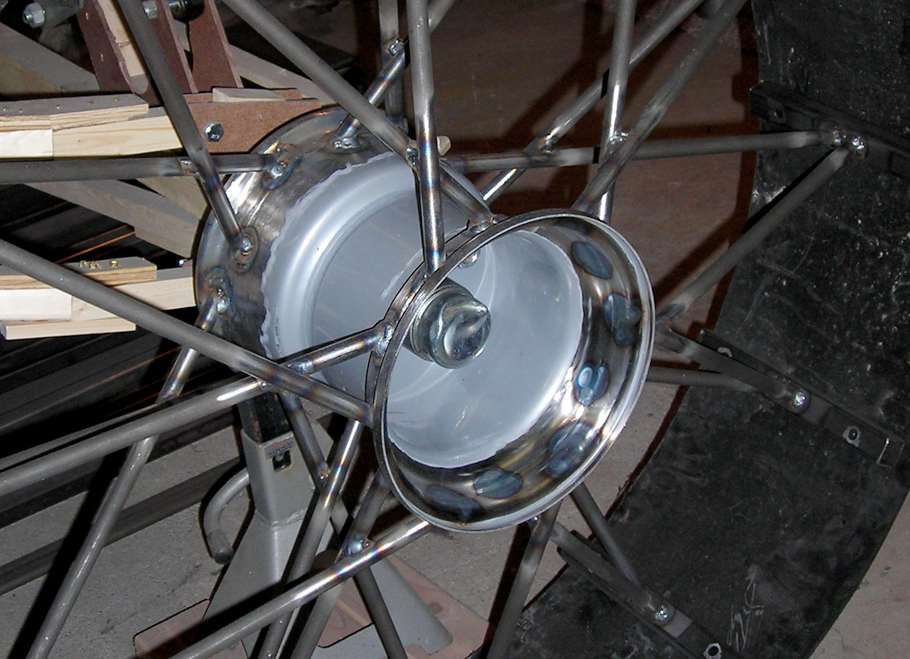
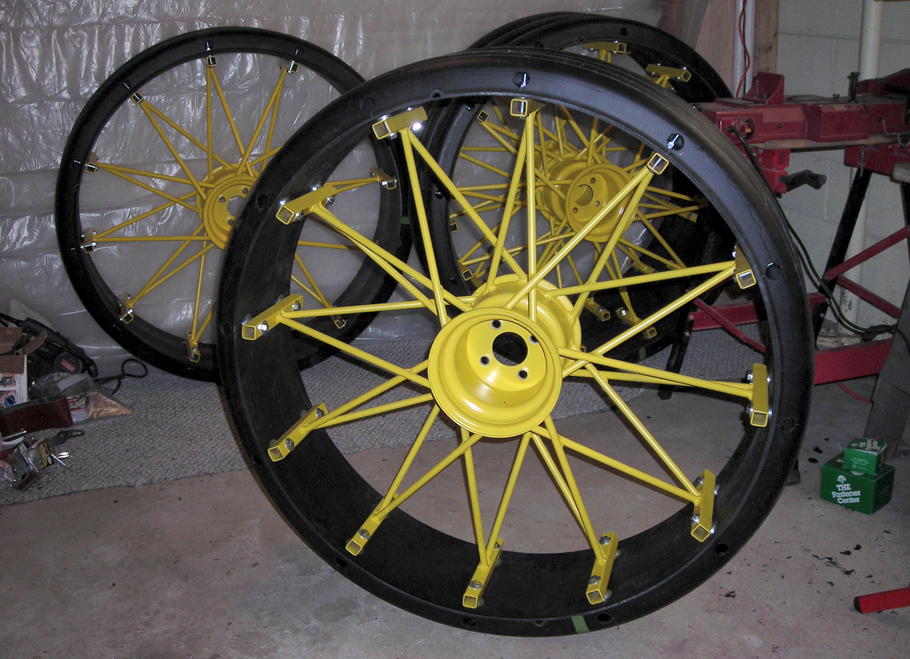
The genesis for the Pup began with the front tires. The original plan for the DogSled included a trailer. The DogSled's final weight pretty much ruled that option out. One of the accommodations that Burning Man makes, as does the rules required by the BLM and law enforcement, is the issuance of motored vehicle licenses for those with disabilities and limited mobility within Black Rock City. My parents have been traveling with us to Burning Man since 2003. My mom qualifies for the license and, even though she does have a powered trike, she really needed something a little more "interesting" to drive around.
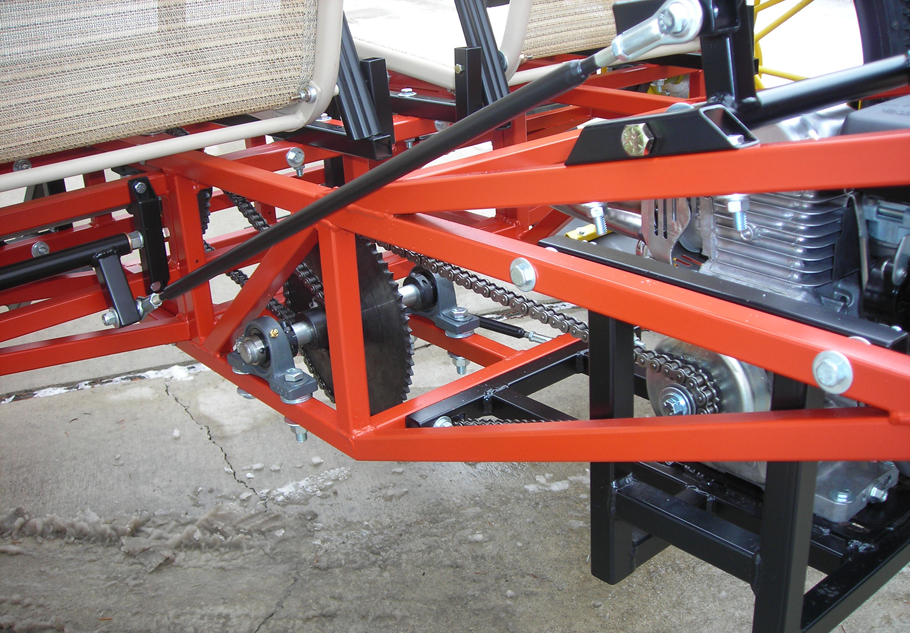
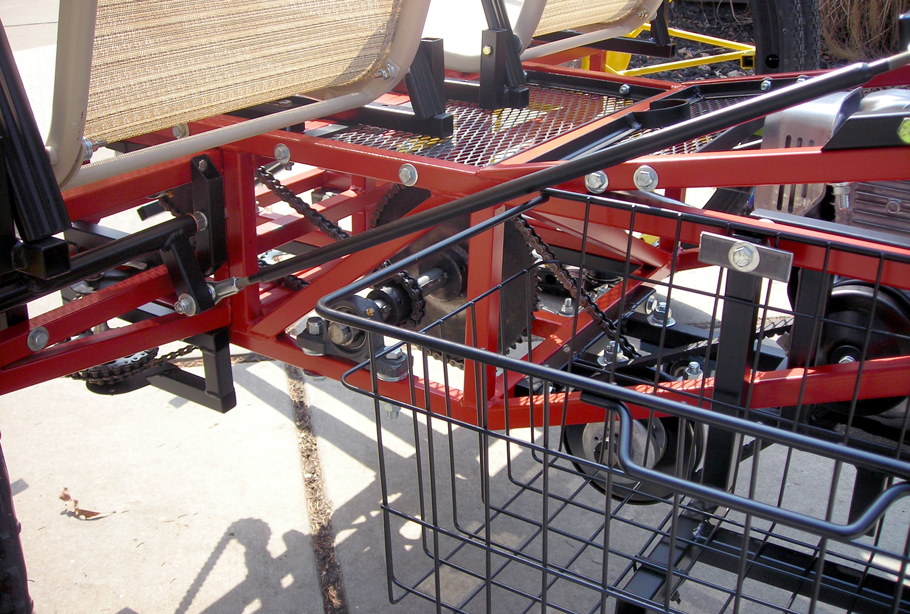
Misc. power-train components: #40 chain; sprockets; pillow blocks; etc.
Go-cart brakes, axles and rear hubs
Recycled (garbage picked) bikes
Patio chairs & umbrella
Drivetrain & Brake
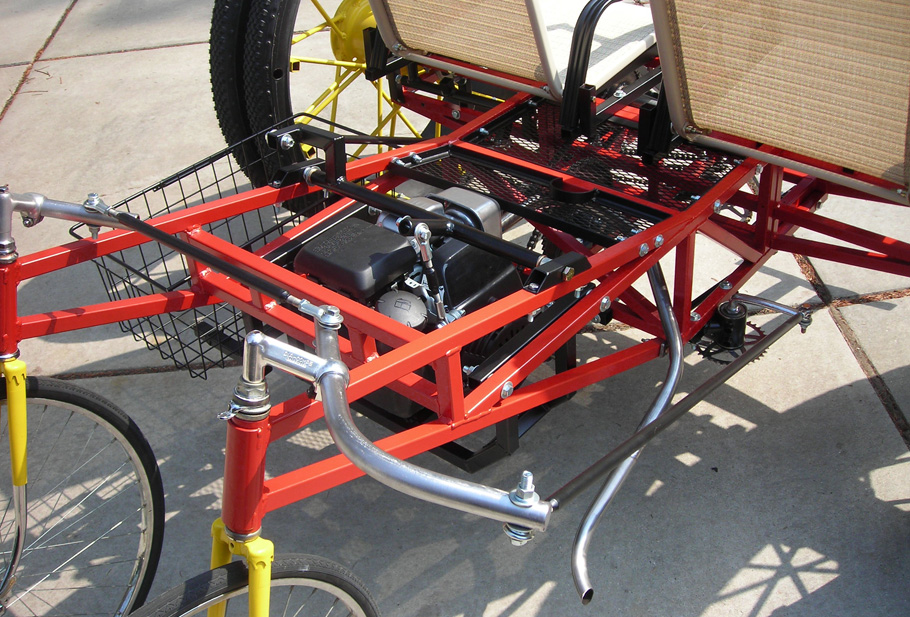
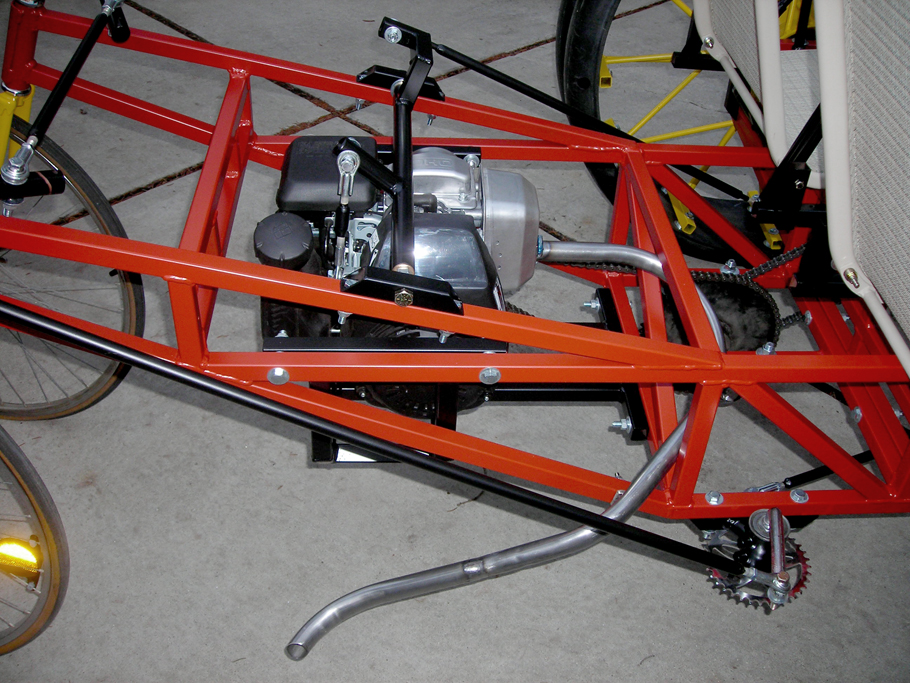
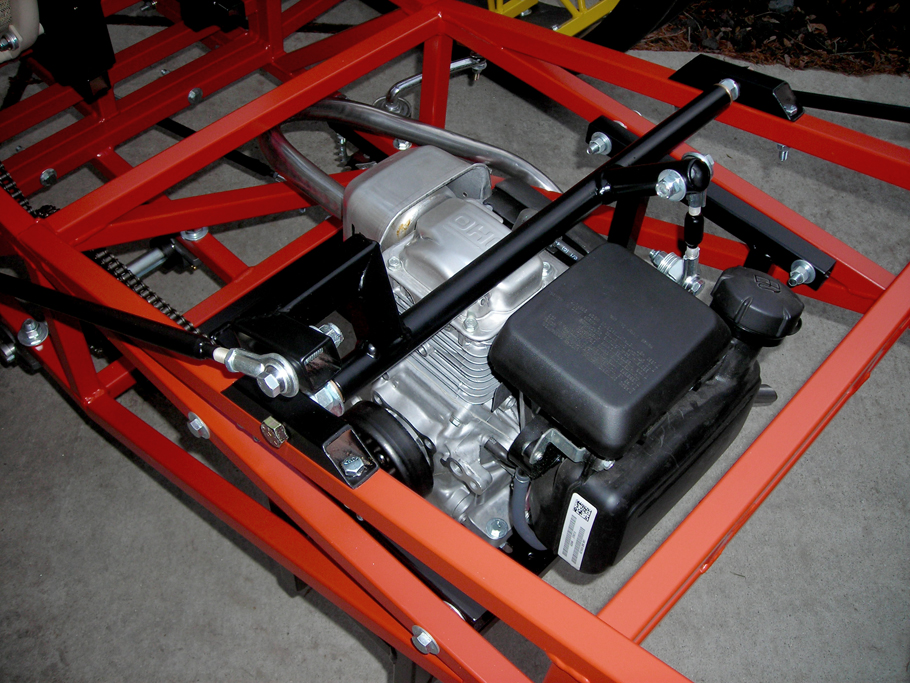
Another learning curve here. Initially, without researching, I assumed that a centrifugal clutch could handle the torque required to move the larger diameter wheels. Wrong assumption. Final drive train uses a torque converter and jackshaft to drive the front left wheel. The right front wheel spins free to accommodate different rotation rates during turns.
The engine throttle is connected by a tie rod to a handle on the left side of the left seat. Braking is through a smaller handle, connected by a solid rod, to mechanical calipers and disc on the left wheel axle.
Steering
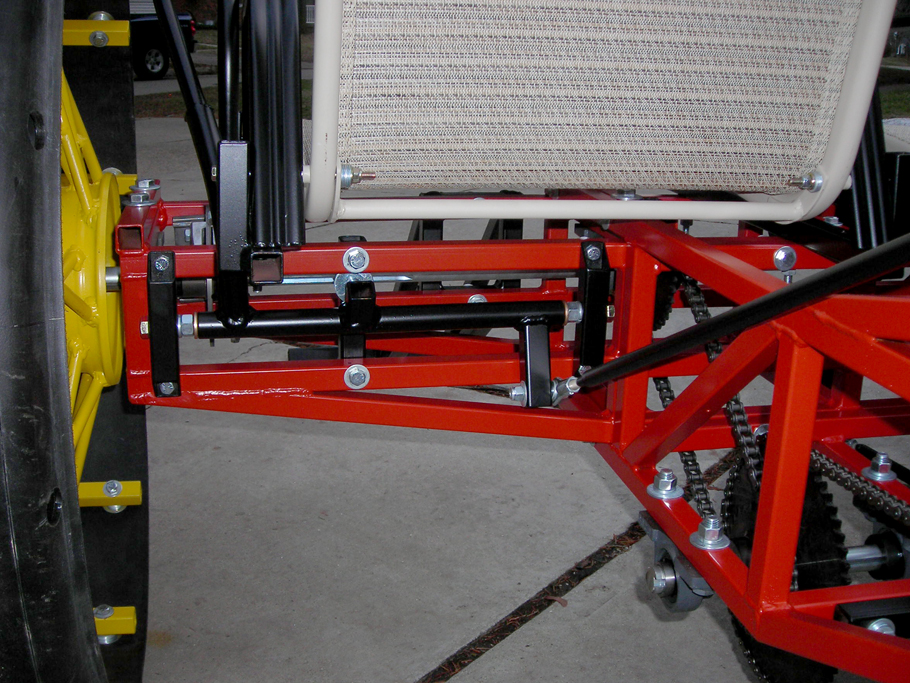
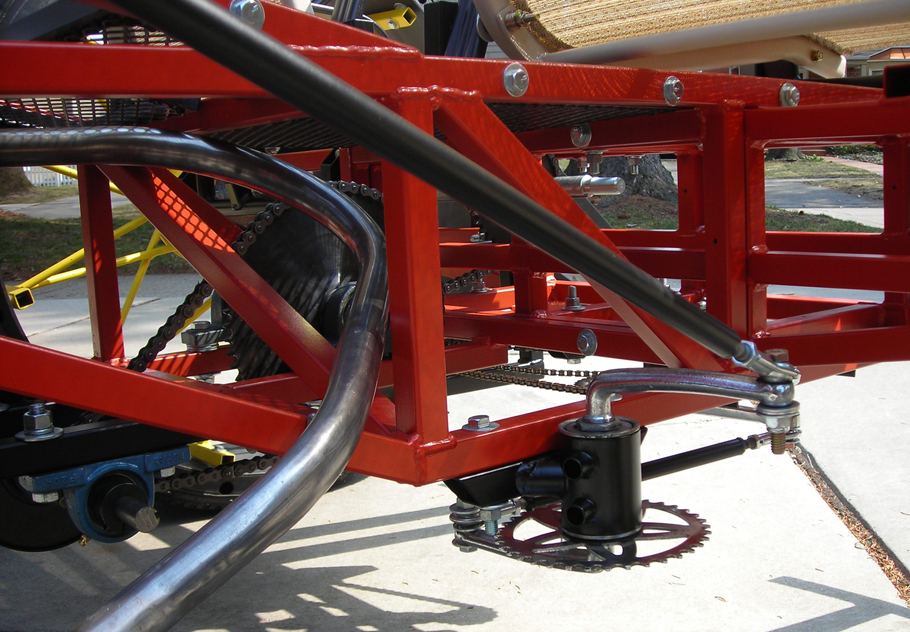
First design used a stick-shift type handle between the seats. This linked to the rear bicycle wheels through tie rods and a bicycle pedal crank. Only problem, this created too direct of a connection between the handle and the wheels. Also learned fairly quickly that a rear steer vehicle has a tendency to "wag" its rear end while under power. This trait was compounded by the single front wheel drive and brake. Made for some very interesting initial test rides.
Corrected steering uses a handle made from a pedal crank mounted to the top of an extended bicycle front fork. A sprocket at the bottom end is geared down through a rear bicycle sprocket set and crank mounted horizontally below the seats. Turning, stop to stop, is about two revolutions of the steering handle crank. Between the total reduction through the sprokets, and tightening up all the tie rod connections, the "wagging" is no longer noticeable.